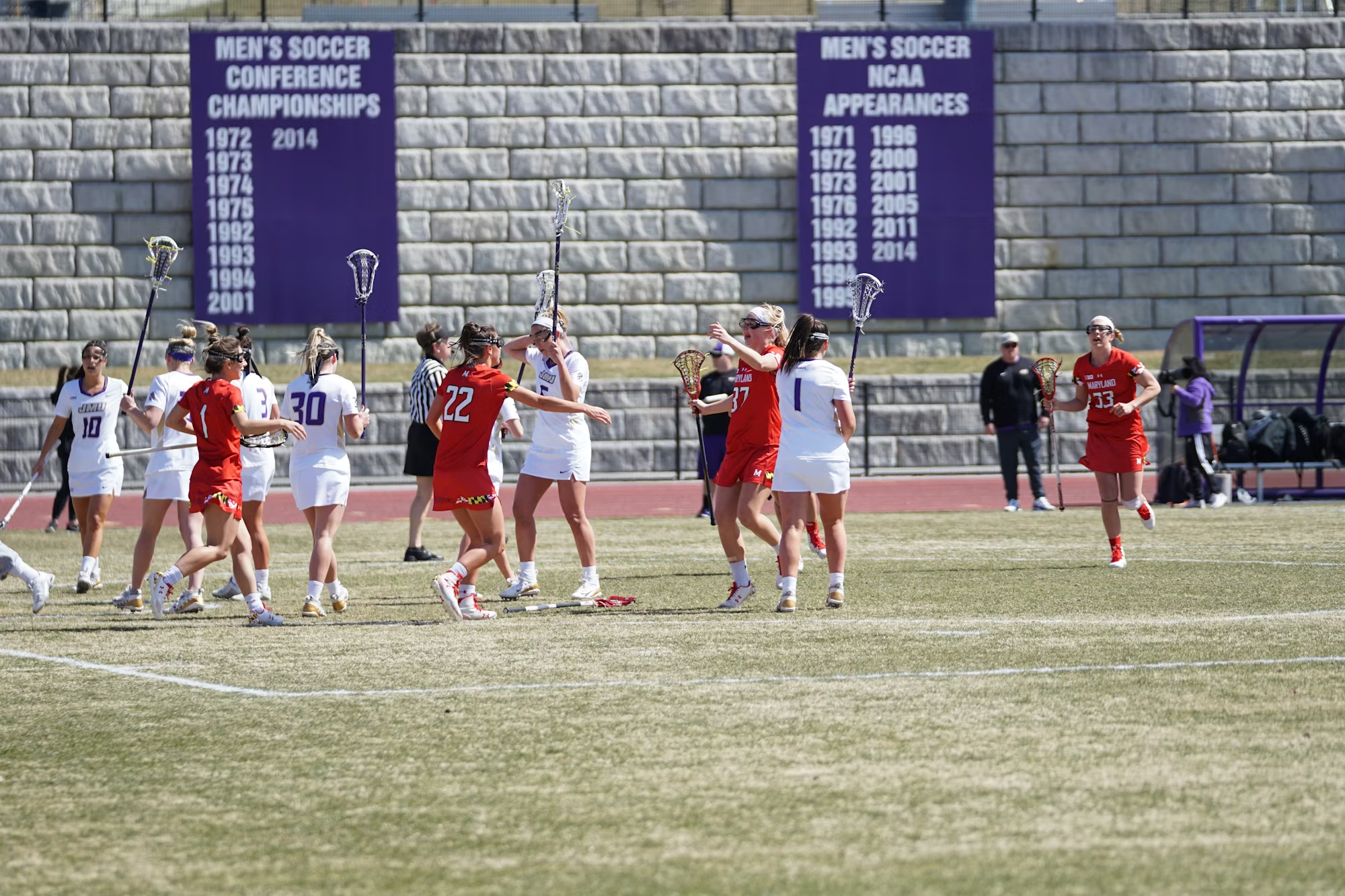
Team sports have long been a defining feature of human culture, offering not only a thrilling spectator experience but also a rich ground for personal development and life lessons. These sports provide more than just competition—they are a unique avenue for learning about collaboration, leadership, perseverance, and the art of collective achievement. Whether it’s soccer, basketball, rugby, or volleyball, team sports create environments where individuals must come together, blending their skills and strengths to reach a common goal. The success of a team depends on far more than individual talent; it relies on how well the players can work together and support one another.
The Foundation of Team Sports: Unity in Diversity
At the heart of every successful team sport is unity. The concept of teamwork in sports is not simply about players performing their roles; it’s about synchronizing these roles in a way that maximizes the collective effort. Unlike individual sports, where the success or failure depends on a single person’s actions, team sports require each member to contribute toward a larger purpose. Every athlete, from the star player to the benchwarmer, plays a role in the team’s success.
In a sport like soccer, for example, the striker’s role is to score goals, but this can only happen if the defenders and midfielders create space and opportunities for them to do so. In basketball, a point guard sets up offensive plays, but it’s the shooters and big men who finish those plays with baskets. This interdependence among players shows that success in team sports comes from the collective effort rather than the actions of any one individual.
Moreover, the diversity of skills within a team is one of the factors that make it strong. A well-rounded team brings together players with different abilities, styles, and perspectives, all of which contribute to the success of the team. Some players might be exceptional at defending, while others excel at attacking. Some are quick and agile, while others are strong and powerful. The key to success is in how these diverse skills are brought together and used strategically.
Leadership and Communication: Guiding the Team to Victory
While unity and diversity are crucial, leadership and communication are the cornerstones that hold a team together. In any team sport, leadership extends beyond the coach and captain. Every player has the potential to lead in their own way, whether through vocal encouragement, setting an example, or guiding others through difficult moments. Leadership in team sports is not about being the loudest or the most dominant player, but about being someone who inspires, motivates, and encourages others to do their best.
The role of a captain, whether in rugby or soccer, is often symbolic of leadership. But effective leadership involves more than just taking the team out for a pre-game pep talk or raising the trophy at the end of a championship. It’s about being a consistent presence, offering guidance when needed, and knowing when to push the team forward or hold back. A captain’s leadership helps keep the morale high, especially during challenging moments. They act as a bridge between the coach and the players, communicating strategies and rallying the team.
Effective communication is another essential aspect of team sports. Whether it’s calling for the ball in soccer, signaling a play in basketball, or shouting instructions in hockey, communication is a constant and essential part of the game. Players must be able to understand and anticipate each other’s moves, often without even speaking. This requires a deep understanding and trust between teammates.
When players can communicate efficiently—whether verbally or non-verbally—it allows the team to function as a cohesive unit. A well-communicated strategy will always outperform a strategy that is not shared or understood by everyone. Communication fosters understanding and clarity, both of which are critical when the pressure is on and every second counts.
Strategy and Adaptability: Thinking Ahead in the Heat of the Moment
One of the most exciting aspects of team sports is the level of strategy involved. Every game is a tactical battle, with coaches and players constantly adjusting their plans to exploit the weaknesses of their opponents. The best teams are those that can adapt their strategies on the fly, making quick decisions to outthink their competition.
For example, in basketball, a team may start with a fast-paced, high-scoring offense, only to switch to a more deliberate and structured approach when they are facing a tough opponent. In football, a team may initially rely on running plays but then shift to a passing attack after the defense adjusts. These tactical decisions, made in real-time, can be the difference between winning and losing.
But strategy is not limited to the coach’s playbook. Players must also be able to read the game as it unfolds, making real-time decisions that complement the team’s broader strategy. A midfielder in soccer, for example, must constantly scan the field for passing options, choosing the right moment to release the ball or make a run themselves. A quarterback in football must quickly assess the defense and decide whether to hand the ball off, pass, or run it themselves.
The ability to adjust to changing circumstances is what separates good teams from great ones. The best teams are not those that execute a rigid strategy but those that can adapt their tactics based on the evolving conditions of the game. Whether it’s an injury to a key player, a change in the weather, or the opponent’s unexpected shift in strategy, the ability to remain flexible and focused on the end goal is a hallmark of a successful team.
Resilience and Perseverance: Overcoming Setbacks Together
While strategy and leadership are essential, resilience is perhaps the most important trait a team can possess. No team is immune to adversity, and setbacks are inevitable. Whether it’s trailing by a significant margin, dealing with injuries, or facing an emotionally challenging game, how a team responds to adversity often defines their character.
Resilience in team sports is not just about individual determination—it’s about how the team as a whole bounces back from setbacks. A soccer team that falls behind early in a match doesn’t give up; instead, they regroup, support each other, and come up with new ways to get back into the game. A basketball team that has missed several shots in a row doesn’t let it affect their confidence but continues to fight, learn from their mistakes, and look for opportunities to improve.
The true test of resilience is not when things are going well but when challenges arise. It’s in these moments that the value of teamwork becomes most apparent. When players rely on one another, share the burden of failure, and work together to overcome adversity, the team grows stronger. Success is built on the ability to persist through difficulty, and the best teams are those that refuse to give up, even when the odds are stacked against them.
The Cultural Impact of Team Sports
Team sports go beyond individual achievement and contribute significantly to cultural identity. Whether at the local, national, or international level, sports have the ability to bring communities together and foster a sense of belonging and pride. Fans rally around their teams, forming lifelong bonds that transcend cultural, social, and geographical boundaries.
In countries such as Brazil, Argentina, and Spain, soccer is more than just a sport—it’s a part of the national fabric, an integral part of the culture that defines these nations. Similarly, in the United States, American football, basketball, and baseball are more than just games; they are a symbol of unity, a way for people to connect and share in something larger than themselves.
The excitement and energy surrounding team sports can ignite a sense of pride, especially when teams represent their cities, states, or countries on the global stage. These events are not just about winning or losing; they are about community, identity, and the shared experience of following a team through the highs and lows of competition.
Conclusion: The Lasting Value of Team Sports
Team sports offer lessons that last far beyond the final whistle. They teach players the value of teamwork, the importance of strategic thinking, the power of leadership, and the need for resilience. These are lessons that carry over into everyday life, where success is often a product of collaboration and adaptability.
In addition, team sports provide a sense of connection and purpose, uniting individuals from all walks of life under the banner of a common goal. The excitement and camaraderie experienced through sports can create lasting memories and forge lifelong bonds, making team sports an invaluable aspect of human culture.
Ultimately, team sports remind us that success is not just about individual achievement but about working together, overcoming challenges, and striving toward something greater than ourselves. They inspire us to push past our limits, learn from our failures, and celebrate our collective accomplishments.