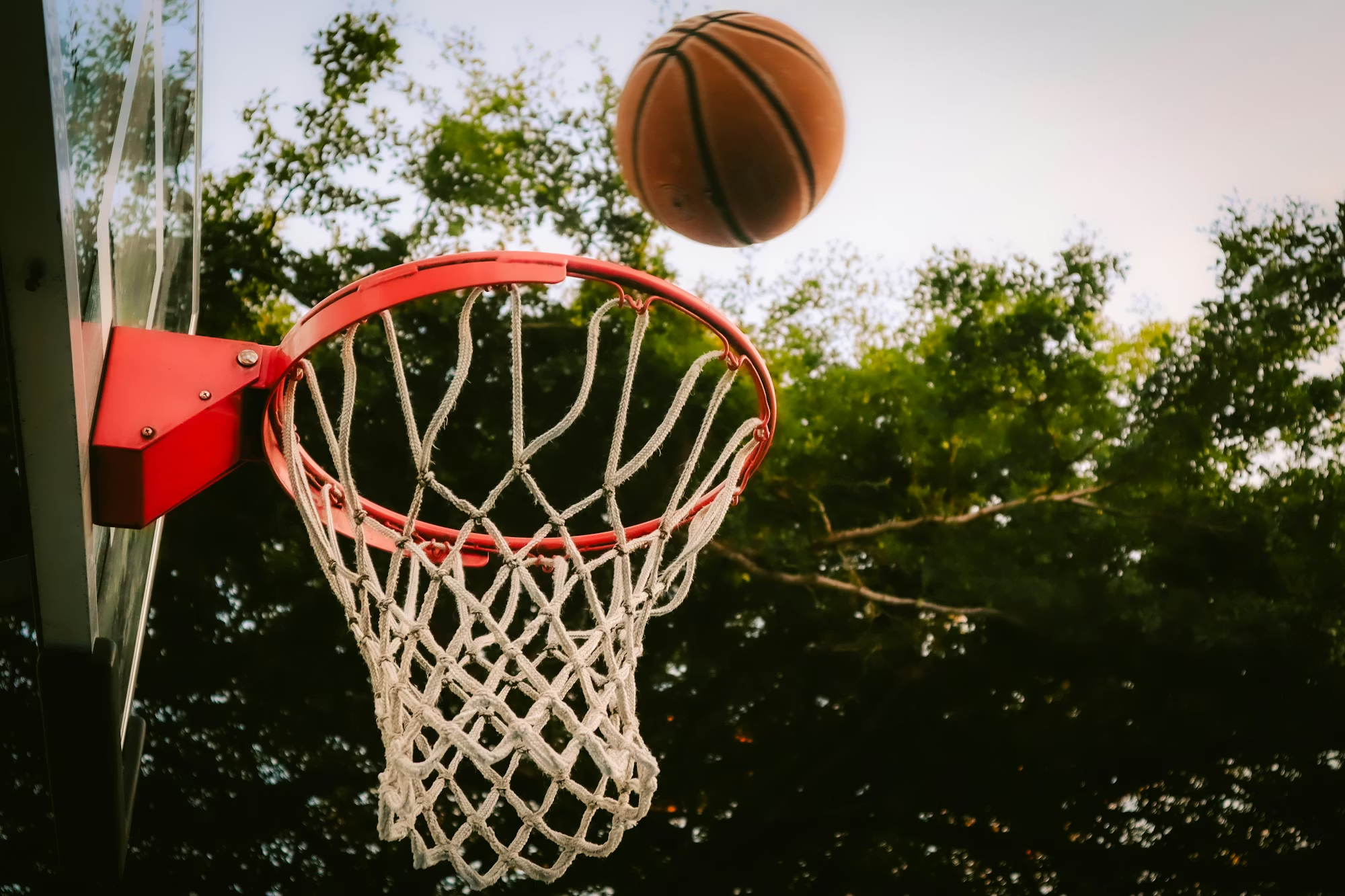
Basketball is a dynamic sport that requires a blend of physical skills, mental acuity, and teamwork. Mastering the fundamental skills is crucial for any player looking to excel on the court. This article delves into the essential basketball skills and techniques, providing insights and tips on how players can develop their abilities to achieve success.
1. Shooting Techniques
Shooting is arguably the most critical skill in basketball. A player’s ability to score points can significantly influence the outcome of a game. There are various shooting techniques that players should master:
A. The Jump Shot:
The jump shot is a fundamental technique that allows players to shoot over defenders. To execute a jump shot effectively, players should maintain a balanced stance, hold the ball correctly, and follow through with their shooting hand. Practicing shooting from different spots on the court will help players become more versatile scorers.
B. Free Throws:
Free throws are an essential part of scoring, and players must develop consistency in this area. Focusing on routine, balance, and mental focus can improve free throw shooting. Players should practice shooting free throws under pressure to simulate game situations, helping them remain calm during crucial moments.
2. Dribbling Skills
Dribbling is crucial for ball handling and creating scoring opportunities. Effective dribbling allows players to navigate through defenses and maintain possession of the ball. Key techniques include:
A. Control Dribbling:
This technique emphasizes keeping the ball close to the body while maintaining control. Players should practice dribbling with both hands to become more versatile and unpredictable.
B. Crossovers and Hesitations:
Using moves like crossovers and hesitation dribbles can create space and confuse defenders. Practicing these moves in various scenarios will enhance a player’s ability to drive to the basket or create jump shot opportunities.
3. Passing Techniques
Passing is vital for teamwork and ball movement. Good passers can set up scoring opportunities for teammates, making this skill indispensable. Key passing techniques include:
A. Chest Pass:
The chest pass is a fundamental pass used for short distances. Players should focus on proper technique, ensuring they step towards their target and follow through.
B. Bounce Pass:
The bounce pass is effective for getting the ball around defenders. Players should aim for a bounce point that allows the ball to rise into their teammate’s hands, increasing the chances of a successful reception.
4. Rebounding Skills
Rebounding can determine the flow of a game. Players who excel in this area can create additional scoring opportunities and limit opponents’ chances. Key rebounding techniques include:
A. Box Out:
Boxing out is essential for gaining position under the basket. Players should use their bodies to create space and secure rebounds, ensuring they maintain a low center of gravity for stability.
B. Timing and Jumping:
Timing is crucial when attempting to rebound. Players should practice their jumping technique to improve their ability to leap above opponents and secure the ball.
5. Defensive Techniques
Defense is just as important as offense in basketball. Effective defensive players can disrupt opponents and create turnovers. Essential defensive techniques include:
A. On-Ball Defense:
On-ball defense involves staying in front of the offensive player while maintaining a low and balanced stance. Players should use quick footwork and anticipation to keep their opponent from driving or shooting.
B. Help Defense:
Help defense is crucial for team dynamics. Players must communicate and be aware of their teammates’ positions, ready to assist when necessary. Practicing rotations and defensive strategies can enhance a team’s overall defensive performance.
6. Understanding the Game
Beyond physical skills, understanding basketball’s strategies and concepts is essential for success. Players should study game tactics, including:
A. Offensive Strategies:
Learning about various offensive plays and formations will help players make informed decisions during games. Understanding how to read defenses can enhance a player’s ability to create scoring opportunities.
B. Defensive Schemes:
Players should familiarize themselves with different defensive systems, such as man-to-man and zone defenses. Knowing when to switch defensive strategies can significantly impact the game’s outcome.
7. Mental Preparation and Conditioning
Physical skills are only part of the equation; mental preparation and conditioning are vital for peak performance. Players should focus on:
A. Mental Toughness:
Basketball can be mentally challenging, especially during high-pressure situations. Players should practice visualization techniques, setting goals, and maintaining a positive mindset to enhance their mental resilience.
B. Physical Conditioning:
Basketball requires stamina, agility, and strength. Players should engage in conditioning exercises that improve their endurance, speed, and agility, ensuring they can perform at their best throughout the game.
8. Teamwork and Communication
Basketball is inherently a team sport. Effective communication and teamwork are essential for success. Players should:
A. Build Chemistry:
Developing chemistry with teammates enhances on-court performance. Players should practice together, build rapport, and understand each other’s strengths and weaknesses.
B. Communicate on the Court:
Effective communication during games can prevent misunderstandings and enhance teamwork. Players should practice calling plays, signaling for passes, and providing feedback to one another.
Conclusion
Mastering basketball skills requires dedication, practice, and a willingness to learn. By focusing on shooting, dribbling, passing, rebounding, and defense, players can enhance their overall performance and contribute to their team’s success. Understanding the game, developing mental toughness, and fostering teamwork are equally crucial for achieving excellence on the court. As players continue to refine their skills and embrace the spirit of the game, they not only improve as athletes but also as individuals who embody the values of dedication, teamwork, and resilience.